Island Definition and Types
An island is a landmass surrounded by water, smaller than a continent, existing in oceans, seas, lakes, or rivers; archipelagos are groups of islands.
Islands are categorized as continental or oceanic, differing in geological origin and shelf placement, with no strict size distinction from continents.
Six major island types exist: continental, tidal, barrier, oceanic, coral, and artificial, each formed through unique geological processes and characteristics.
What Constitutes an Island?
Defining an island presents a surprisingly complex challenge, as there isn’t a universally accepted size standard differentiating it from a continent. Essentially, an island is a naturally formed landmass completely encircled by water – be it within oceans, seas, lakes, or even rivers. This fundamental characteristic of being surrounded distinguishes it from larger landmasses connected to continents.
The term “island” originates from Old English, combining “īg” (meaning island) and “land.” Historically, the definition has remained consistent: a discrete area of land isolated by water. However, the lack of a specific size threshold allows for considerable variation, ranging from tiny islets to substantial landforms like Greenland. Continents, conversely, possess a defined geological basis related to tectonic plates.
Ultimately, an island’s identity rests on its complete water-bound existence, a key factor in shaping its unique ecosystems and cultural development.
Continental vs. Oceanic Islands
Islands broadly fall into two primary categories: continental and oceanic, distinguished by their geological origins and positions. Continental islands were once connected to a larger continental landmass, now separated by rising sea levels or tectonic shifts. They reside on the continental shelf, sharing geological characteristics with the adjacent continent.
Oceanic islands, conversely, form far from continental landmasses, typically arising from volcanic activity or coral reef development. These islands are built from the ocean floor, possessing distinct geological compositions. Their isolation fosters unique evolutionary pathways and ecosystems.
Understanding this distinction is crucial, as it influences an island’s biodiversity, geological structure, and overall environmental characteristics, shaping its unique identity within the global landscape.
Six Major Island Types
Islands are remarkably diverse, categorized into six major types based on their formation and characteristics. Continental islands, like Madagascar, were once part of a continent. Tidal islands connect to the mainland during low tide. Barrier islands protect coastlines, forming parallel to the shore.
Oceanic islands, such as Hawaii, arise from volcanic activity. Coral islands, like the Maldives, are built by coral reefs. Finally, artificial islands are constructed by human intervention, often for strategic or economic purposes.
Each type presents unique geological features, ecosystems, and challenges, contributing to the planet’s varied island landscapes and biodiversity.
Continental Islands
Continental islands represent fascinating geological remnants, historically connected to larger continental landmasses. These islands reside on the continental shelf, distinguishing them from oceanic formations. Their separation often occurred due to shifting tectonic plates or rising sea levels over millennia.
Examples include Madagascar, Borneo, and Newfoundland, showcasing diverse ecosystems and unique biodiversity. They generally feature similar geological compositions to the adjacent continents, influencing their landscapes and natural resources.
Continental islands often exhibit richer soil and more complex flora and fauna due to their past connections, fostering distinct evolutionary pathways.
Tidal Islands
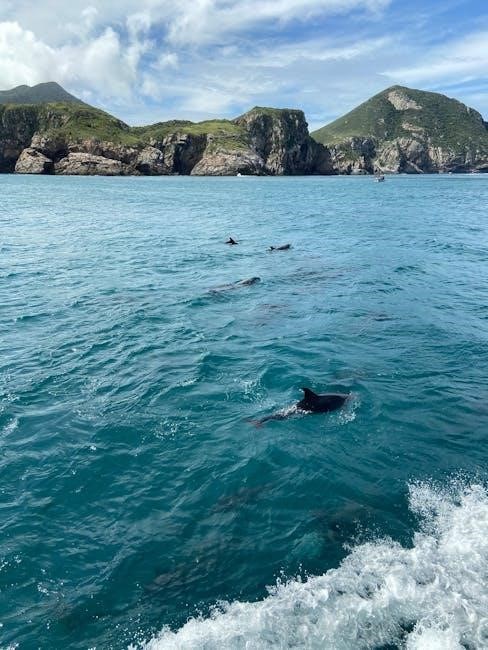
Tidal islands are captivating landforms uniquely connected to the mainland during low tide, yet become isolated islands when the tide rises. This intermittent connection defines their character and influences their ecosystems. They are typically found near coastlines with significant tidal ranges.
Mont Saint-Michel in France and Lindisfarne in England are iconic examples, showcasing historical and cultural significance. These islands often feature causeways or bridges facilitating access during high tide, demonstrating human adaptation to the dynamic coastal environment.
The intertidal zone supports specialized plant and animal life, adapted to fluctuating water levels and exposure.
Barrier Islands
Barrier islands are dynamic coastal landforms, running parallel to the mainland and shielding it from the full force of ocean waves and storms. These elongated islands are composed primarily of sand and sediment, constantly reshaped by wind and water currents.
They provide crucial habitat for diverse species, including nesting sea turtles and migratory birds. The Outer Banks of North Carolina and Padre Island in Texas exemplify these systems, showcasing their ecological importance.
Barrier islands are inherently unstable, prone to erosion and overwash, yet play a vital role in coastal protection and biodiversity.
Oceanic Islands
Oceanic islands are formed far from continental landmasses, typically through volcanic activity. These islands arise from hotspots in the Earth’s mantle or along mid-ocean ridges, building up over millennia from successive eruptions. Examples include Hawaii, Iceland, and the Galapagos Islands.
Because of their isolation, oceanic islands often harbor unique ecosystems and high levels of endemism – species found nowhere else on Earth. Their formation and evolution are driven by geological processes and biological dispersal.
These islands represent fascinating natural laboratories for studying evolution and adaptation in isolated environments.
Coral Islands
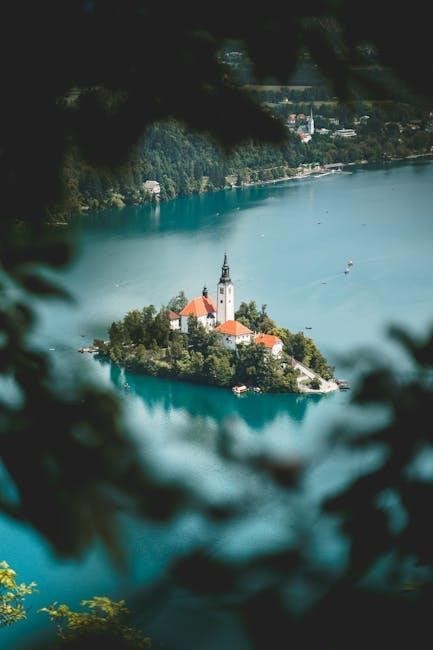
Coral islands are fascinating formations built by the accumulation of coral skeletons over extended periods. These islands typically develop in warm, shallow waters, often encircling volcanic islands or forming atolls – ring-shaped reefs surrounding a lagoon.
The Great Barrier Reef, the Maldives, and numerous islands in the Pacific Ocean are prime examples of coral island ecosystems. They are incredibly biodiverse, supporting a vast array of marine life.
However, coral islands are particularly vulnerable to climate change, sea level rise, and ocean acidification, posing significant threats to their long-term survival and the ecosystems they support.
Artificial Islands
Artificial islands are constructed by human intervention, typically using land reclamation techniques. These islands are created for various purposes, including expanding land area, providing space for infrastructure, or establishing military bases.
Notable examples include Palm Jumeirah in Dubai, Kansai International Airport in Japan, and several islands in the Netherlands used for flood control. The construction often involves dredging sand, rock, and other materials.
Creating artificial islands can have significant environmental impacts, affecting marine ecosystems and coastal processes. Careful planning and mitigation strategies are crucial to minimize these negative consequences.

Island Ecosystems and Biodiversity
Island ecosystems are unique, often isolated, and harbor endemic species due to limited gene flow and evolutionary pressures; biogeography plays a key role.
Unique Island Ecosystems
Island ecosystems present fascinating biological scenarios, often characterized by isolation and unique evolutionary pathways. This isolation fosters the development of specialized flora and fauna, distinct from those found on larger continental landmasses. Limited immigration and emigration rates contribute to a restricted gene pool, accelerating the process of speciation and resulting in a high proportion of endemic species – organisms found nowhere else on Earth.
The delicate balance within these ecosystems makes them particularly vulnerable to external disturbances, such as invasive species or habitat destruction. Island environments frequently exhibit simplified food webs, meaning the removal of even a single species can have cascading effects throughout the entire system. Understanding these intricacies is crucial for effective conservation efforts, protecting the biodiversity hotspots that islands represent.
Island Biogeography
Island biogeography, a field pioneered by Robert MacArthur and E.O. Wilson, explores the factors governing species richness on islands. Key determinants include island size and distance from the mainland. Larger islands generally support more species due to greater habitat diversity and reduced extinction rates. Conversely, islands closer to the mainland experience higher immigration rates, increasing species accumulation.
This theory predicts a dynamic equilibrium between immigration and extinction, shaping the island’s species composition. Isolation plays a critical role; remote islands exhibit lower immigration and higher rates of endemism. Understanding these principles is vital for conservation, predicting the impact of habitat loss, and managing invasive species on these fragile ecosystems.
Endemic Species on Islands
Islands frequently harbor endemic species – plants and animals found nowhere else on Earth. This unique biodiversity arises from isolation, fostering evolutionary divergence. Limited gene flow encourages the development of distinct traits adapted to the island’s specific environment. Iconic examples include the Galapagos finches, Hawaiian honeycreepers, and Madagascar’s lemurs.
However, endemic species are particularly vulnerable to extinction. Their restricted ranges make them susceptible to habitat loss, invasive species, and climate change. Conservation efforts are crucial to protect these irreplaceable components of global biodiversity, safeguarding the evolutionary heritage of island ecosystems.
The History of Island Exploration
Early discoveries of islands occurred throughout history, with island mapping and cartography evolving alongside navigational advancements, revealing previously unknown lands.
Early Island Discoveries
Throughout history, island discoveries were intrinsically linked to the development of seafaring capabilities and exploration. Ancient civilizations, like the Polynesians, demonstrated remarkable navigational skills, colonizing numerous Pacific islands over centuries. Phoenician sailors and Greek explorers also ventured into the Mediterranean and beyond, charting islands and establishing trade routes.
Vikings famously explored and settled islands like Iceland and Greenland, pushing the boundaries of known territories. Later, during the Age of Exploration, European powers – Portugal, Spain, England, and France – embarked on extensive voyages, “discovering” and claiming islands across the globe. These expeditions were often driven by the pursuit of trade, resources, and territorial expansion, fundamentally reshaping global maps and intercultural interactions.
Island Mapping and Cartography
Early island mapping relied heavily on rudimentary navigational tools and observational skills. Explorers used astrolabes, quadrants, and dead reckoning to estimate positions and create basic charts. These early maps, though often inaccurate, were crucial for subsequent voyages and trade. The development of cartography as a science significantly improved mapmaking accuracy.
Advancements in surveying techniques, mathematical projections, and printing technologies enabled the creation of more detailed and reliable island maps. Portolan charts, known for their precise coastal outlines, were particularly valuable for maritime navigation. Over time, cartographers incorporated new discoveries and refined their methods, leading to increasingly sophisticated representations of islands and their surrounding waters.
The Dymaxion Map and Island Representation
Buckminster Fuller’s Dymaxion map, a projection of the Earth onto a 20-sided icosahedron, offered a novel approach to representing landmasses, including islands. Unlike traditional maps, the Dymaxion map minimized distortion by unfolding the globe, presenting continents and islands in a continuous, interconnected manner.
This projection dramatically altered perceptions of geographical relationships, highlighting the relative sizes and proximities of islands often minimized on conventional maps. The Dymaxion map visually emphasized the interconnectedness of the world’s landmasses, challenging traditional geopolitical boundaries and fostering a more holistic understanding of global geography and island contexts.
“Island of the Blue Dolphins” ⎻ The Novel
Scott O’Dell’s novel draws inspiration from the true story of Juana Maria, a Native American woman stranded for eighteen years on San Nicolas Island.
Historical Context of the Story
“Island of the Blue Dolphins” is rooted in the early 19th-century interactions between Native Americans and Russian and American hunters in California. The story reflects the devastating impact of colonization on the Nicoleño people, the original inhabitants of San Nicolas Island. Increased contact led to disease, conflict, and ultimately, the forced removal of most of the tribe to the mainland mission at Santa Barbara in 1835.
Juana Maria, the real-life inspiration, was left behind, surviving alone for eighteen years until her eventual rescue in 1853. O’Dell’s novel, published in 1960, fictionalizes her experience, offering a poignant portrayal of resilience, adaptation, and the loss of a traditional way of life. The historical backdrop underscores the themes of isolation, cultural clash, and the struggle for survival against overwhelming odds.
The Real-Life Inspiration: Juana Maria
Juana Maria was a Nicoleño Native American woman who lived alone on San Nicolas Island, off the coast of California, for eighteen years – from 1835 to 1853. Abandoned after the forced relocation of her tribe to the mainland, she remarkably survived by utilizing the island’s resources, crafting tools, and building a shelter. Her resilience captivated those who occasionally observed her from passing ships.
Rescued in 1853 by Captain George Nidever, she was brought to Santa Barbara, where she struggled to adapt to mission life and succumbed to dysentery within months. While details of her life remain fragmented, Juana Maria’s story became a legend, inspiring Scott O’Dell’s acclaimed novel, “Island of the Blue Dolphins,” which immortalized her extraordinary tale of solitude and survival.
Themes Explored in the Novel
“Island of the Blue Dolphins” profoundly explores themes of isolation, resilience, and the clash between cultures. Karana’s solitary existence forces her to confront loneliness and develop remarkable self-reliance, demonstrating the strength of the human spirit in the face of adversity. The novel also examines the devastating impact of colonization on indigenous populations, highlighting the loss of traditional ways of life and the disruption of a harmonious relationship with nature.
Furthermore, the story delves into themes of adaptation and survival, as Karana learns to navigate her environment and overcome challenges. It subtly questions the concept of ‘civilization’ and celebrates the inherent value of a life lived in harmony with the natural world, prompting readers to reflect on their own connection to the environment.

Island Tourism and Travel
Popular island destinations offer sprawling beaches, rich cultures, and wilderness; travel costs vary greatly, with adventure tourism gaining prominence worldwide.
Popular Island Destinations
Globally, numerous islands beckon travelers with diverse attractions. The Maldives, renowned for luxurious overwater bungalows and vibrant coral reefs, consistently ranks high. Bali, Indonesia, captivates visitors with its spiritual ambiance, lush rice paddies, and world-class surfing. For a Caribbean escape, Barbados offers pristine beaches, lively nightlife, and historical sites.
Hawaii, a US state, presents volcanic landscapes, diverse ecosystems, and Polynesian culture. Santorini, Greece, enchants with its whitewashed villages perched on cliffs overlooking the Aegean Sea. Closer to home, the Galapagos Islands, Ecuador, provide unique wildlife encounters, inspiring evolutionary studies. These destinations, among countless others, showcase the allure of island getaways, promising unforgettable experiences.
Cost of Travel to Islands
Island travel expenses vary dramatically based on destination, time of year, and travel style. Remote islands like the Maldives or Galapagos typically involve higher transportation costs, often exceeding $1,500 for flights alone. Accommodation ranges from budget-friendly hostels ($50/night) to luxury resorts ($500+/night).
Caribbean islands offer a wider price range, with all-inclusive resorts averaging $200-$400/night. Southeast Asian islands, such as Bali, are generally more affordable, with costs around $75-$150/night. Daily expenses for food, activities, and local transport can add another $50-$100. Careful planning and off-season travel can significantly reduce overall costs.
Adventure Tourism on Islands
Islands provide diverse adventure tourism opportunities, catering to various thrill-seeking preferences. Scuba diving and snorkeling are popular in coral-rich destinations like the Great Barrier Reef and the Philippines, costing $100-$200 per excursion. Hiking and trekking are prevalent on volcanic islands like Hawaii and Iceland, with guided tours ranging from $75-$150.
Water sports, including surfing, kayaking, and windsurfing, are widely available, averaging $50-$100 per session. More extreme adventures, such as volcano boarding in Nicaragua or canyoning in Palawan, can cost $150-$300. Island adventures often combine natural beauty with exhilarating activities, creating unforgettable experiences.
Island Cultures and Traditions
Island cultures are often unique, shaped by isolation and environment, resulting in distinct languages, dialects, art forms, and musical traditions.
Unique Island Cultures
Island cultures frequently develop in relative isolation, fostering distinctive traditions and societal structures. This geographical separation often leads to the preservation of ancient customs, languages, and belief systems, creating a rich tapestry of human expression. The limited resources available on many islands necessitate strong community bonds and collaborative practices, influencing social organization and resource management.
Unique artistic expressions, including intricate crafts, vibrant music, and compelling storytelling, frequently emerge as central components of island identity. These cultural manifestations often reflect a deep connection to the natural environment, incorporating local materials and themes. Furthermore, island communities often exhibit a strong sense of place and a profound respect for their ancestral heritage, contributing to the enduring vitality of their cultural traditions.
Island Languages and Dialects
Island languages and dialects often exhibit remarkable diversity, shaped by geographical isolation, historical migration patterns, and contact with neighboring cultures. The limited interaction with mainland populations frequently leads to the preservation of archaic linguistic features and the development of unique grammatical structures. Furthermore, island communities often incorporate loanwords from various sources, reflecting their complex histories of trade and cultural exchange.
Dialectal variations within islands are also common, influenced by local topography, settlement patterns, and social dynamics. These linguistic nuances can manifest in pronunciation, vocabulary, and idiomatic expressions, contributing to a rich tapestry of linguistic diversity. The preservation of these languages and dialects is crucial for maintaining cultural identity and safeguarding intangible heritage.
Island Art and Music
Island art frequently reflects a deep connection to the natural environment, utilizing locally sourced materials and depicting themes of the sea, wildlife, and ancestral traditions. Artistic expressions often serve as a means of storytelling, preserving cultural knowledge, and celebrating community identity. Traditional crafts, such as weaving, carving, and pottery, are often passed down through generations, embodying a rich artistic heritage.
Island music is equally diverse, ranging from rhythmic drumming and melodic chants to elaborate vocal harmonies and instrumental ensembles. Musical traditions often accompany ceremonies, festivals, and daily life, playing a vital role in social cohesion and cultural expression. The influence of diverse cultural interactions frequently enriches island musical styles, creating unique and captivating soundscapes.